
Unit of Foot and Ankle
Specialists in the study, diagnosis, and application of surgical techniques for foot surgery.
Inicio › Medical units › Unit of Foot and Ankle › Ankle Arthroplasty / Prosthesis
Ankle Arthroplasty / Prosthesis
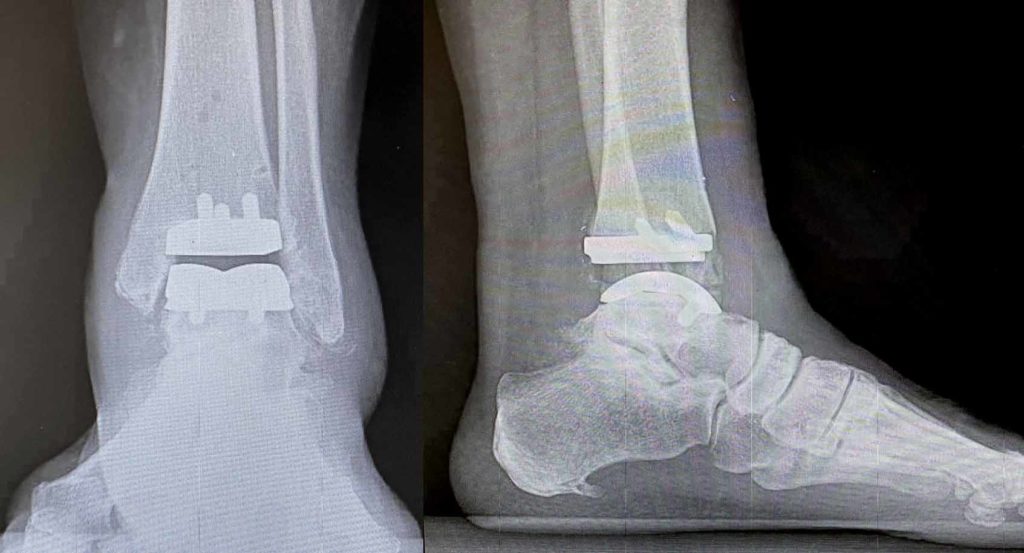
Radiological Images of an Ankle Prosthesis
Arthroplasty is surgery in which a damaged joint, due to arthritis, is replaced with a prosthesis. In this case, the joint between the tibia and the talus, i.e., the ankle, is replaced.
Prosthetic technology has advanced significantly over the years. Currently, there is a wide range of prostheses that allows the surgeon to choose the one that best restores the patient’s functionality, considering factors such as age, height, weight, the pathology that caused the ankle wear, and daily activities, both work-related and sports.
The materials used to manufacture the prostheses are typically chromium, cobalt, titanium, or high-density plastics.
The goal of arthroplasty is to remove the damaged joint and replace it with a prosthesis. This surgical procedure will correct any associated deformities and relieve the pain caused by arthritis.
Why is arthroplasty performed?
Arthroplasties are indicated for patients with osteoarthritis when non-surgical measures to alleviate pain, such as analgesics, insoles, or physiotherapy, have failed.
The osteoarthritis in patients requiring a prosthesis can originate from a rheumatic disease, avascular necrosis of the talus, sequelae from an ankle fracture, primary osteoarthritis due to aging, or can be indicated for reconstructing the joint after an oncological process.
However, ankle arthroplasty may not always be feasible. Prostheses are not recommended for patients with poor circulation in the legs, significant ligament instability, difficult-to-control diabetes, or severe deformities in the ankles. In such cases, an ankle fusion or arthrodesis may be considered.
What does ankle arthroplasty / prosthesis surgery involve?
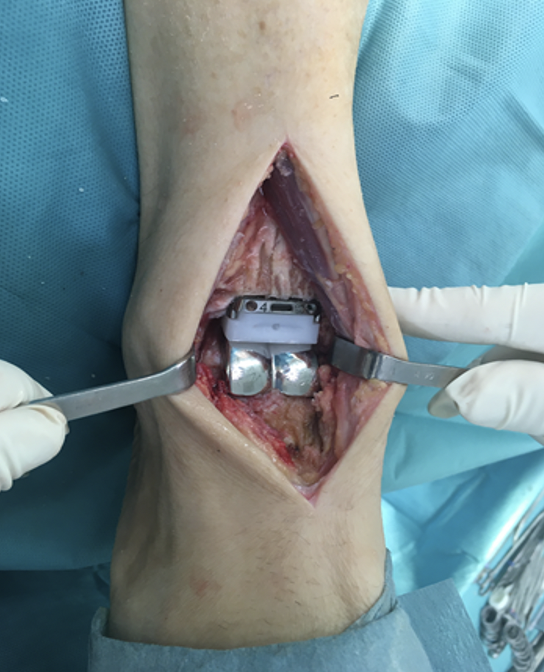
A 15-centimeter incision will be made over the ankle to expose the joint, remove the damaged cartilage remnants, correct any existing deformity, and finally, proceed with the replacement.
No special preparation of the patient is required, and the surgery is usually performed under general anesthesia, although in some cases, local anesthesia may be chosen.
In the image, we can see a surgical photograph of an ankle prosthesis.
What is the postoperative care for an ankle prosthesis?
After the surgery, the patient typically stays in the hospital for at least one day to monitor pain and swelling. Once these have diminished, the ankle is immobilized with a cast, and the patient is discharged to their home. The cast will remain in place for 3-6 weeks, after which a rehabilitation program will begin, which is a key part of the patient’s recovery.
Recovery can take from 2 to 3 months, although it may take up to 6 months for the patient to return to normal activity levels.
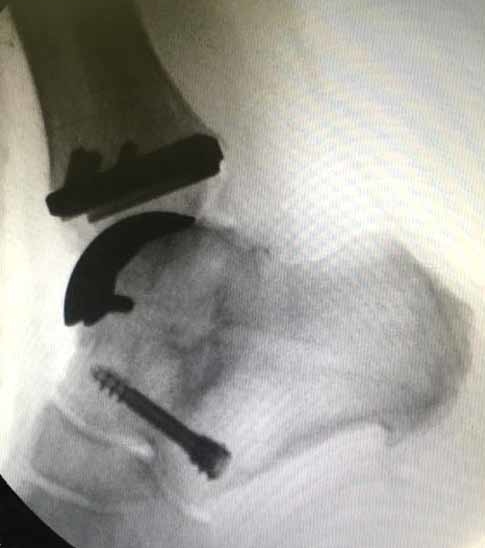
In the image, we can see a surgical photograph of an ankle prosthesis.


