Hip Unit
Established alongside the creation of the Department of Locomotor System Pathology and Sports Medicine.
Inicio › Medical units › Hip Unit › Osteoarthritis in the Elderly
What is Osteoarthritis in the Elderly?
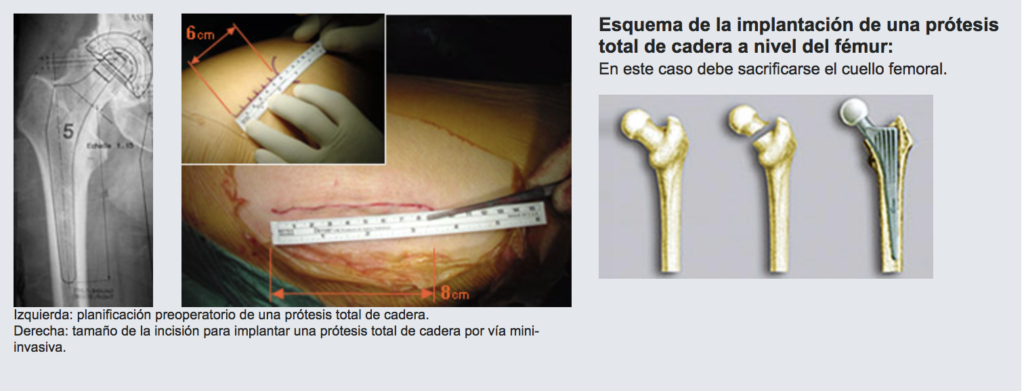
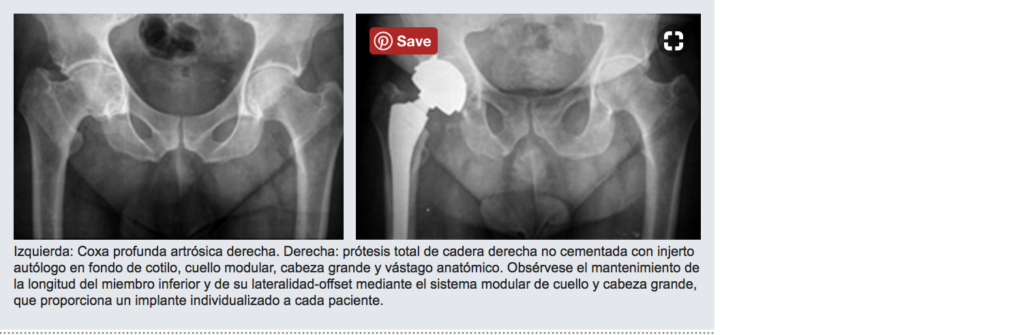
In male individuals, generally over 65 years of age, and female individuals over 55 years, the bone at the level of the femoral head and neck presents lower resistance compared to younger individuals. In these cases, we recommend the implantation of a total hip prosthesis instead of a surface prosthesis. Our service was a pioneer in the implantation of total hip prostheses with modular necks and large diameter heads, which allows for adjusting the length of the limb and individualized selection of each femoral neck, as if it were a custom-made prosthesis.
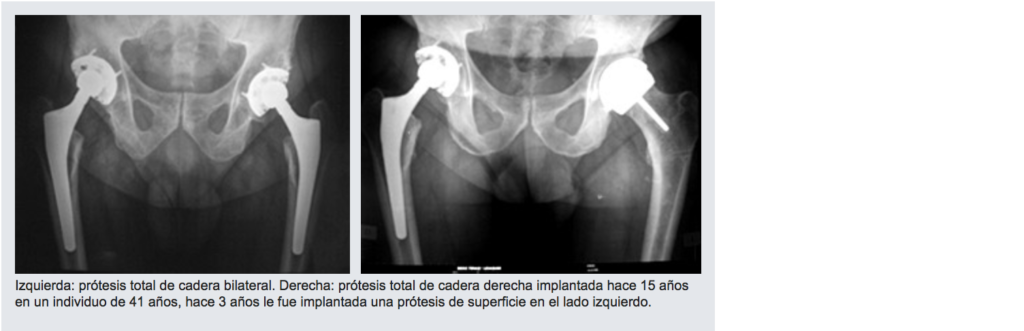
These implants consist of an acetabular component made up of a titanium cup, into which a polyethylene or ceramic core or a metal component is inserted, and a femoral component or stem—made of either titanium or cobalt-chrome alloy, either uncemented or cemented—that reaches the first third of the femur, to which a ceramic or metal head is added. Nowadays, the use of low-friction implants is preferred to avoid premature wear of the prosthesis, such as ceramic-on-ceramic, highly cross-linked polyethylene, and even metal-on-metal. In this field, minimally invasive surgery allows for a faster recovery in many cases.
The durability of the implant, especially the femoral stem, ranges from 95% to 98% at 20 years, whereas the acetabular component remains intact in 3 out of 4 implants at 15 years. However, the notion that no more than one or at most two hip prostheses can be implanted has become obsolete. There are specific designs for each case, and moreover, the Bone Bank allows us to reestablish more bone surface for implanting the new prosthesis.