Knee Unit

A unit that combines experience, expertise, prestige, and proximity with the most advanced techniques in arthroscopic surgery.

Do you have knee health problems?

What do we offer?

The knee is the largest joint in the body, located at the center of the lower limbs, serving as a connection between the thigh and the leg. Between the femur and the tibia are two fibrocartilaginous structures shaped like crescents called menisci.

Together, they enable flexion-extension movement with a range of mobility and positioning that can sometimes lead to various injuries associated with sports activities and/or degenerative processes such as “osteoarthritis” over the years:

  • Meniscal injuries.
  • Ligament injuries.
  • Prosthetics, fractures.
  • Chondral injuries, etc.
Years of experience
0 +

Dedicated entirely to our patients.

Patients treated
0 +
Professionals
0
Facility size
0

Technology

We use the most advanced non-invasive techniques in arthroscopic surgery.
Arthroscopy involves inserting a camera and various instruments (forceps, motor, vaporizer, etc.) through small skin incisions. These techniques were initially developed for the treatment of knee pathologies.

Services:

The unit offers training programs (fellowships) endorsed by various societies such as ISAKOS (International Society of Arthroscopy, Knee Surgery and Orthopedic Sports Medicine) and ESSKA (European Society of Sports Traumatology, Knee Surgery & Arthroscopy). It is recognized as an Approved Teaching Center by these organizations. These programs are aimed at resident physicians and specialists in orthopedics and traumatology who are interested in the fields mentioned above, with the goal of sharing knowledge, experiences, and fostering cultural exchange.

For more information about this unit, visit: http://www.equilae.com/

Arthroscopic surgery covers a wide range of procedures and injuries affecting both sedentary individuals and high-level athletes. From the most common and simple injuries, such as meniscal tears and anterior cruciate ligament (ACL) injuries, to highly complex surgeries such as meniscal transplants or multiligament injuries. The IcatKnee team specializes in all of them, with extensive experience and surgeons accredited in performing complex arthroscopic surgery.

Patellar dislocation can lead to instability, which in a high percentage of cases requires surgical treatment. At IcatKnee, we use a minimally invasive technique (which is also recommended for children) to reconstruct the injured ligament. Additionally, we conduct a comprehensive assessment of the patellofemoral joint, correcting any associated injuries in a personalized approach known as “à la carte” treatment.

Cartilage injuries in young patients can cause significant disability, and in many cases, joint preservation surgery is preferred over joint replacement. At IcatKnee, we have over 20 years of experience performing corrective osteotomies for joint preservation in young patients. In recent years, we have also been pioneers in Spain in developing and performing cartilage transplants for selected cases.


Joint replacement surgery, or prosthetic surgery, is the definitive solution for knee osteoarthritis or joint wear. This type of surgery has been proven to significantly improve the quality of life of patients suffering from knee pain due to osteoarthritis. At IcatKnee, we specialize in knee prosthetic surgery, including both total knee replacement and partial (unicompartmental) knee prostheses.

When a prosthesis wears out or loosens, it may be due to a mechanical issue or a septic problem (infection), even in the absence of fever or purulent drainage. Infections related to orthopedic implants require treatment by a highly specialized multidisciplinary team. For this reason, every prosthetic revision must be thoroughly evaluated and treated according to the cause of implant failure. At IcatKnee, we have a dedicated team specializing in prosthetic revision surgery and implant-related infections.

Fractures, especially those affecting the knee joint, can have serious consequences, such as early-onset osteoarthritis. At IcatKnee, we apply arthroscopically assisted fracture reduction techniques to achieve the best possible outcome and restore the knee’s normal anatomy.

Knee Pathologies

Patients typically report knee pain following a movement of varying intensity. In the following days, this pain may be accompanied by additional symptoms, such as:

  • Swelling and inflammation.
  • Difficulty bending the knee.
  • Difficulty walking and limping.
  • Locking and/or difficulty fully extending the knee.

During arthroscopy, a systematic review of the entire joint is performed before proceeding with specific meniscal treatment. Depending on the case, one of the following interventions may be carried out: partial meniscus removal (meniscectomy), meniscus repair, meniscal replacement, or meniscal transplantation.

Anterior cruciate ligament injuries are commonly associated with sports, particularly those requiring pivoting, such as football, basketball, skiing, rugby, etc.

In patients experiencing symptoms of joint instability during daily activities and/or sports, surgical treatment for ligament reconstruction is indicated.

Patellofemoral syndrome pain arises from increased pressure between the patella and the femoral trochlea, causing irritation and, over time, cartilage wear. Pain typically occurs when climbing or descending stairs, squatting, or standing up after sitting for a long time.

Most cases improve with an appropriate physical therapy program. However, in some cases, if pain persists and limb misalignment exists, surgical treatment focuses on correcting the altered anatomical parameters.

Osteoarthritis is the most common cause of disability and chronic knee pain. The articular cartilage, which facilitates proper movement between the knee bones, begins to thin and wear down. Consequently, increased friction between bones causes pain and joint stiffness. Symptoms typically appear after age 50 or 60.

Knee replacement surgery relieves pain, enabling patients to resume daily activities. Success rates are high, with over 90% of patients experiencing significant pain relief and improved functionality in their daily lives.

Knee fractures may result from low-energy mechanisms in older patients or high-energy mechanisms, such as traffic accidents or contact sports.

Treatment depends on the patient’s characteristics and the type of fracture. When surgery is performed, it is common to combine it with arthroscopy to more precisely control fracture reduction and simultaneously repair other affected structures, such as menisci, ligaments, articular cartilage, and to remove loose bodies and the hematoma caused by the fracture.

Due to the lack of blood vessels in cartilage tissue, its capacity for self-repair/regeneration is virtually nonexistent. Surgical treatment aims to create repair or replacement tissue with histological properties as similar as possible to native cartilage or, in severe cases, to completely restore the damaged tissue with an allograft.

Treatment options include advanced bone marrow stimulation techniques, osteochondral transplants (mosaicplasty), direct osteosynthesis, chondrocyte cultures, and mesenchymal cell therapies.

Osteotomy is a procedure designed to realign a deviated or deformed limb. It involves making a partial cut in the bone, either in the femur (commonly for valgus deformities) or the tibia (commonly for varus deformities), with the addition or subtraction of a bone “wedge” to correct the deformity as planned preoperatively.

Once the correction is achieved, the osteotomy is secured with osteosynthesis material, allowing immediate joint movement and, in some cases, early weight-bearing.

These injuries involve damage to more than one ligament in the knee and often result from high-energy trauma, such as a car accident.

Once the decision is made, surgical planning is essential. Reconstruction of multiple knee ligaments often requires the use of allografts, which are tendons obtained from a tissue bank.

The iliotibial band (IT band) is the tendinous portion of the tensor fascia lata muscle, which originates in the iliac crest of the pelvis, descends along the lateral thigh, and inserts distally in the tibia.

Several factors contribute to the onset of this syndrome, also known as runner’s knee. It primarily affects runners and cyclists who engage in prolonged repetitive knee flexion within the same range of motion.

Initial treatment involves reducing exercise intensity. If needed, local corticosteroid injections may follow, and surgery is the last resort. During surgery, a lateral knee approach is used to perform a partial tenotomy and resection of the inflamed bursa.

These prostheses are a more recent development, allowing replacement of one or two parts of the knee without requiring total joint replacement. Not all osteoarthritis cases qualify for these prostheses. Compared to total knee replacements, the surgical technique is less invasive, resulting in quicker patient recovery.

Some patients who undergo meniscectomy may later develop a painful knee syndrome, including swelling and reduced range of motion, known as post-meniscectomy syndrome. Young, active patients with this condition may benefit from a meniscal transplant.

Meniscal transplantation is a complex surgical technique performed in few centers across Spain. ICATME’s Knee Team, led by Professor Monllau, pioneered this technique in Spain and Europe, receiving referrals from all over Europe for post-meniscectomy syndrome.

Cartilage is a tissue with limited capacity for repair and reconstruction. In recent years, techniques for transplanting fresh cartilage from deceased donors have been developed.

This complex technique is reserved for highly selected cases of knee cartilage injuries. ICATME’s Knee Team was the first to perform this procedure in Spain’s private healthcare sector.

ACL reconstruction in pediatric patients differs from the same procedure in skeletally mature patients. Over the past decade, scientific literature has emphasized the importance of reconstructing the ACL in children rather than waiting for growth to finish, as previously believed.

Surgical techniques in these cases differ significantly from those used in adults and are particularly complex. Therefore, they should only be performed in specialized centers for arthroscopic surgery.

ICATME’s Knee Unit performs complex pediatric ligament surgeries and was the first center in Spain to join the European Society of Knee Surgery (ESSKA) project on pediatric ACL reconstruction (PAMI) since its inception in 2018. Furthermore, it became the first center in Europe to use tendons from one of the child’s parents for ACL reconstruction, a technique in which ICATME is a leader in Spain and Europe.

El equipo

La mejor unidad de rodilla esta formada por los mejores profesionales sanitarios de su área.

Medical team

The Knee Unit is composed of orthopedic surgeons and traumatologists specialized in the comprehensive treatment of orthopedic and traumatic knee conditions.

ICATKNEE combines experience, knowledge, prestige, and the most advanced techniques in arthroscopic surgery, which has earned us the complete trust of our patients.

 

Dr. Joan Carles Monllau GarcíaOrthopedic and Trauma Specialist.

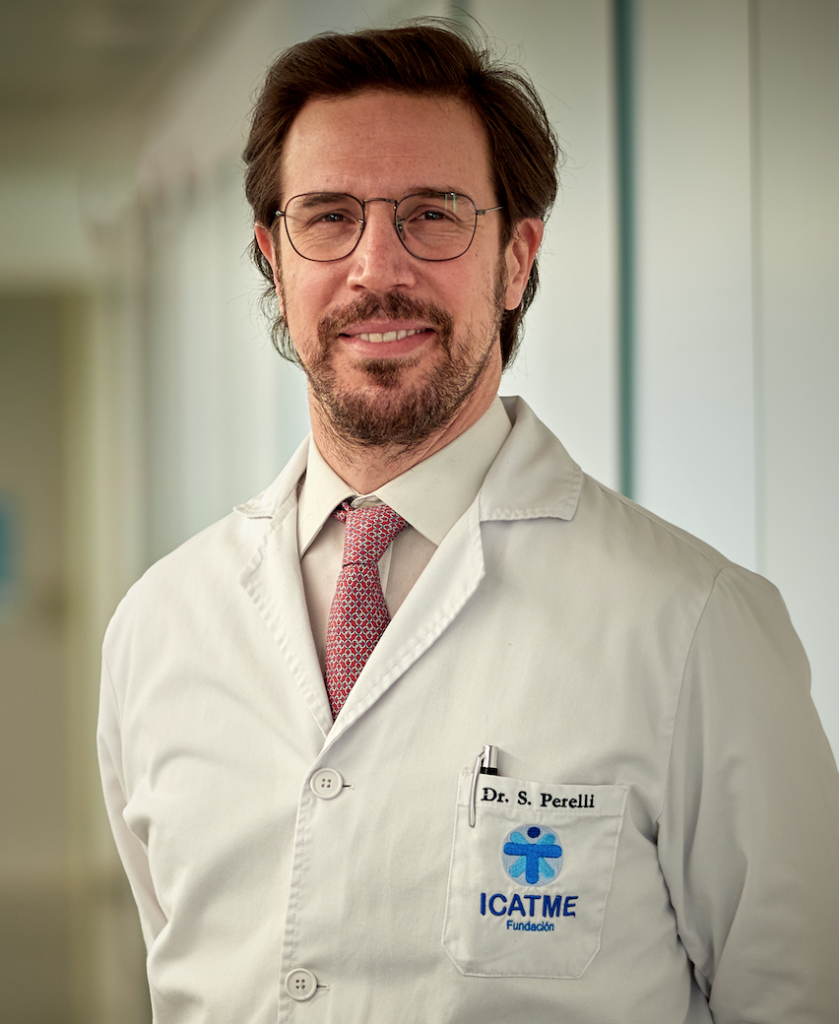
Dr. Simone PerelliOrthopedic and Trauma Specialist.

Dr. Angel MasferrerOrthopedic and Trauma Specialist.

Dr. Raúl Torres ClaramuntOrthopedic and Trauma Specialist.

Dr. Daniel Pérez PrietoOrthopedic and Trauma Specialist.

Dr. Francisco SimónOrthopedic and Trauma Specialist.

Dr. Nicola PizzaOrthopedic and Trauma Specialist.

Dr. Maximiliano IbañezOrthopedic and Trauma Specialist.

Dirección:
Hospital Universitari Dexeus Grupo Quirónsalud
ICATME
Carrer de Sabino Arana, 5-19 Planta 2
E-mail:
info@icatme.com
Horario:
De lunes a viernes
08:00 – 19:00

Address:

Hospital Universitari Dexeus
Grupo Quirónsalud

Sabino Arana, 5-19, 2nd Floor.
08028 – Barcelona
E-mail:
info@icatme.com

Opening Hours

Monday to Thursday from 08:00 to 21:00.
Friday from 08:00 to 15:00.

DR. JC. MONLLAU

Referente internacional en el campo de la cirugía de rodilla, que incluye tanto la medicina degenerativa como la deportiva. Realizó su doctorado en la Universidad de Barcelona (UB) en 1983 y su doctorado en la Universidad Autónoma de Barcelona (UAB) en 1999. El profesor Monllau es autor de más de 139 artículos en revistas internacionales arbitradas y de más de 60 capítulos de libros. Ha impartido más de 250 conferencias nacionales e internacionales y actualmente es mentor y supervisor de varios proyectos de doctorado.
Ha sido jefe de la unidad de rodilla del Hospital del Mar (2004-09), jefe del departamento de Ortopedia del Hospital de la Sta. Creu i Sant Pau (2009-14) y actualmente es jefe de departamento de Ortopedia del Hospital Parc de Salut Mar (2015). Profesor titular de Ortopedia en la UAB (1997-2008) y Catedrático de la misma institución desde 2009.
Es miembro activo de las siguientes sociedades: 
Asociación Española de Artroscopia (AEA), de la que fue presidente en el período 2011-13
Sociedad Española de Cirugía Ortopédica y Traumatología (SECOT)
Sociedad Europea de Traumatología Deportiva, Cirugía de Rodilla y Artroscopia (ESSKA), en la que actualmente es vicepresidente segundo.
Sociedad Internacional de Artroscopia, Cirugía de Rodilla y Medicina Ortopédica del Deporte (ISAKOS)  Sociedad Latinoamericana de Artroscopia, Rodilla y Deporte (SLARD), 
Expertos Internacionales en Reconstrucción de Meniscos Forum (IMREF) 
Grupo de Estudio ACL. 
Es también, miembro del consejo editorial de The Journal of Arthroscopy and Related Surgery y ha estado trabajando como revisor para varias revistas, incluidas KSSTA, JEO, Int Orthop, The Knee, RECOT.
https://www.topdoctors.es/doctor/joan-carles-monllau-garcia
https://www.doctoralia.es/juan-carlos-monllau-garcia/traumatologo/barcelona

DR. SIMONE PERELLI

Cirujano ortopédico experto en cirugía de rodilla tanto de conservación articular como de sustitución articular y traumatología del deporte. En los últimos años, ha desarrollado un particular interés en las lesiones ligamentarias de rodillas en pacientes pediátricos y en las técnicas de trasplante meniscal. 
Ha realizado su formación como residente de traumatología en Italia (Hospital Universitario San Matteo, Pavia) y se ha especializado en cirugía de rodilla con 3 fellowships Europeas: 2016 Prof. Johan Bellemans (Belgica), 2017 Prof. Juan Carlos Monllau (España), 2018 Prof. Philipp Lobenhoffer (Alemaña). 
Desde la residencia se ha dedicado a la investigación publicando más de 30 artículos en revistas internacionales. En los últimos 3 años sus trabajos científicos fueron premiados en diferentes ocasiones: 2018 Europe Travelling Award, World Congress of Biomechanics; 2019 Mejor Comunicación Oral, Congreso Nacional Asociación Española Artroscopia; 2021 Mejor Publicación Internacional, Congreso Nacional Asociación Española Artroscopia. 
Actualmente, está terminando su doctorado en la Universidad Autónoma de Barcelona enfocado en las lesiones ligamentarias de rodilla. 
Es Profesor Asociado del grado de Fisioterapia de la Universidad Autonoma de Barcellona. 
Miembro activo de:
  • Sociedad Española de Rodilla (SEROD)
  • Asociación Española de Artroscopia (AEA)
  • Sociedad Italiana de Cirugía de Rodilla y Artroscopia (SIAGASCOT)
  • Sociedad Europea de Traumatología Deportiva Cirugía de Rodilla y Artroscopia (ESSKA)
  • Sociedad Internacional de Traumatología Deportiva Cirugía de Rodilla y Artroscopia(ISAKOS).

DR. ÁNGEL MASFERRER PINO

Cirujano Traumatólogo, experto en Cirugía de Rodilla y Traumatología Deportiva (ICATKNEE grupo ICATME, en Hospital Universitari Dexeus de Barcelona). 
Llevó a cabo su Tesis Doctoral obteniendo la calificación de Cum Laude sobre Trasplante Meniscal (Universidad Autónoma de Barcelona – 2020). 
Realizó un fellowship en la Unidad de Rodilla y Artroscopia del «Institut Català de Traumatologia i Medicina de l’Esport (ICATME)» entre 2013 y 2015. Fue residente de Cirugía Ortopédica y Traumatología en el Hospital Universitari Germans Trias i Pujol (UAB. 2008-2013). Obtuvo su licenciatura en Medicina y Cirugía por la Universidad de Barcelona (UB – Hospital Clínic, 2001-2007).
Autor de más de 100 comunicaciones en congresos internacionales y nacionales, así como ha realizado más de 20 publicaciones en revistas internacionales de alto impacto y capítulos de libros.
Fue formado en traumatología deportiva en los Servicios Médicos del FC Barcelona y Real Sporting de Gijón, siendo actualmente colaborador de los Servicios Médicos del Fútbol Club Barcelona.
Es miembro de la Asociación Española de Artroscopia (AEA), European Sports Traumatology, Knee Surgery and Arthroscopy (ESSKA), Sociedad Española de Traumatología Deportiva (SETRADE), Sociedad Española de Cirugía Ortopédica y Traumatología (SECOT) y Societat Catalana de Cirurgia Ortopèdica i Traumatologia (SCCOT), entre otros.

DR. RAUL TORRES-CLARAMUNT

Cirujano Traumatólogo, experto en Cirugía de Rodilla y Traumatología Deportiva (ICATKNEE grupo ICATME, en Hospital Universitari Dexeus de Barcelona). 
Llevó a cabo su Tesis Doctoral obteniendo la calificación de Cum Laude sobre Trasplante Meniscal (Universidad Autónoma de Barcelona – 2020). 
Realizó un fellowship en la Unidad de Rodilla y Artroscopia del «Institut Català de Traumatologia i Medicina de l’Esport (ICATME)» entre 2013 y 2015. Fue residente de Cirugía Ortopédica y Traumatología en el Hospital Universitari Germans Trias i Pujol (UAB. 2008-2013). Obtuvo su licenciatura en Medicina y Cirugía por la Universidad de Barcelona (UB – Hospital Clínic, 2001-2007).
Autor de más de 100 comunicaciones en congresos internacionales y nacionales, así como ha realizado más de 20 publicaciones en revistas internacionales de alto impacto y capítulos de libros.
Fue formado en traumatología deportiva en los Servicios Médicos del FC Barcelona y Real Sporting de Gijón, siendo actualmente colaborador de los Servicios Médicos del Fútbol Club Barcelona. Es miembro de la Asociación Española de Artroscopia (AEA), European Sports Traumatology, Knee Surgery and Arthroscopy (ESSKA), Sociedad Española de Traumatología Deportiva (SETRADE), Sociedad Española de Cirugía Ortopédica y Traumatología (SECOT) y Societat Catalana de Cirurgia Ortopèdica i Traumatologia (SCCOT), entre otros.

DR. DANIEL PÉREZ-PRIETO

Cirujano ortopédico con experiencia en la cirugía reconstructiva del adulto (artrosis y pre-artrosis), especialmente alrededor de la rodilla. Además, particularmente se dedica al campo de la infección protésica y la osteomielitis.
Es miembro del equipo de Cirugía Séptica del Hospital Parc de Salut Mar y de la Unidad de Rodilla ICATKNEE (grupo ICATME) en Hospital Universitari Dexeus de Barcelona, en los que recibe derivaciones de casos complejos de recambios sépticos protésicos y de osteomielitis.
Actualmente, es miembro de:
  • Sociedad Española de Rodilla (SEROD)
  • European Bone and Joint Infection Society (EBJIS)
  • Sociedad Europea de Traumatología Deportiva, Cirugía de Rodilla y Artroscopia (ESSKA). 
  • Además, es el coordinador de proyectos de investigación de la European Knee Associates (EKA). 
  • Forma  parte también, de Pro-Implant Foundation, entidad encaminada a la investigación y divulgación de la infección protésica y osteomielitis.
Además, cuenta con más de 30 artículos científicos publicados y es revisor de revistas científicas de impacto como KSSTA.

DR. FRANCISCO SIMÓN SÁNCHEZ

Licenciado en Medicina y Cirugía por la Universidad de Murcia (2009-2015).  
Realizó un año de formación en Medicina en la Università degli Studi di Perugia (Italia) (2013-2014). 
Realizó la especialidad en Cirugía Ortopédica y Traumatología en el Hospital Virgen de las Nieves de Granada (asociado a la Universidad de Granada) entre los años 2016-2021.
Durante la especialidad realizó diferentes cursos de posgrado: el Máster de Patología de Hombro de la Sociedad Andaluza de Traumatología (Universidad Internacional de Andalucía) (2019), y el Plan Nacional de Formación en Artroscopia de la Asociación Española de Artroscopia (2020). Desde el inicio de su residencia estuvo interesado en la cirugía artroscópica y en la patología de rodilla, acudiendo como asistente a numerosos cursos de formación. 
Durante el quinto año de la residencia, llevó a cabo una estancia formativa en el Hospital Universitario Dexeus de Barcelona, con el equipo de rodilla del Institut català de Traumatologia i medicina de l’Esport (ICATME) cuyo jefe de unidad es el Dr. Joan Carles Monllau García (enero-marzo 2021). 
Ha presentado 16 comunicaciones en congresos nacionales y ha publicado un artículo científico en la Revista de la Sociedad Andaluza de Traumatología y Ortopedia. 
Actualmente, es socio de distintas sociedades científicas como ESSKA (European Society of Sports Traumatology, Knee Surgery and Arthroscopy), AEA (Asociación Española de Artroscopia), SECOT ( Sociedad Española de Cirugía Ortopédica y Traumatología). 
Desde octubre de 2021 se desempeña como cirujano adjunto de la Unidad de Rodilla ICATKNEE de ICATME en Barcelona.

DR. NICOLA PIZZA

Cirujano ortopédico experto en cirugı́a de rodilla tanto de conservación articular como de sustitución articular y traumatologı́a del deporte.

Licenciado en Medicina y Cirugı́a por la Universidad de Bolonia Alma Mater Studiorum en (2010-2016) con puntuacion maxima cum Laude.
Ha sido Tutor de Anatomia Umana en varios cursos universitarios nacionales y internacional (Buffalo, NY, Estados Unidos) de la Universidad de Bolonia (2012 – 2017)
Ha realizado su formación como residente de traumatologı́a en el Istituto Ortopedico Rizzoli de Bolonia (2017-2022) (asociado a la Universidad de Bolonia) dirigida por el Prof. Stefano Zaffagnini especializandose en cirugia compleja de Rodilla y graduandose con puntuacion maxima Cum Laude.
Ha sido Clinical Fellow por el Institut Català de Traumatologia i medicina de l’Esport (ICATME), Hospital Universitari Dexeus, Barcellona, en la unidad de cirugia Artroscopica y de Rodilla (ICATKNEE) dirigida por el Prof. Juan Carlos Monllau Garcia (Enero 2022 – Julio 2023)
Desde la residencia se ha dedicado a la investigación publicando más de 20 artı́culos en revistas internacionales, y capitulos de libro y presentando los resultados en congresos nacionales y internacionales llegando a ganar el premio de “Best Artrhroscopic Paper 2023” por la sociedad Italiana de de cirugia artroscopica y de rodilla.
https://www.scopus.com/authid/detail uri?authorId=57214127835
https://www.researchgate.net/profile/ icola-Pizza
Actualmenete esta llevando al cabo un Doctorado de Investigacion en Ciencies Morfologiques y Cirurgicas por la Univestit Autonomas de Barcelona (UAB) sobre la Inestabilidad Multidirecional de Rodilla.
Es revisior de las siguentes revistas internacionales: The Knee, BMC Muskoloskeletal Disorders, Journal of Experimental Orthopedics (JEO), Revista Espanola de Cirugia Ortopedica y Traumatologia (RECOT) Y miembro de la Sociedad Italiana de Cirugı́a de Rodilla y Artroscopia (SIAGASCOT) y de la Sociedad Europea de Traumatología Deportiva Cirugía de Rodilla y Artroscopia (ESSKA)