Unit of Foot and Ankle
Specialists in the study, diagnosis, and application of surgical techniques for foot surgery.
Inicio › Medical units › Unit of Foot and Ankle › ACQUIRED DEFORMITIES OF THE FOOT › CAVUS FOOT
CAVUS FOOT
The deformity in cavus foot consists of an elevated plantar arch or vault beyond normal levels. The point of support is concentrated on the heads of the metatarsals (under the toes) and in the heel area.
Cavus foot can cause shortening of the tendons that extend the toes (extensor tendons), making them flex upwards (known as hammer toes), which can lead to pain and calluses. Another clinical feature of cavus foot is the shortening of the triceps surae (formed by the gastrocnemius and soleus muscles), which will lead to a dysfunction of the Achilles tendon.
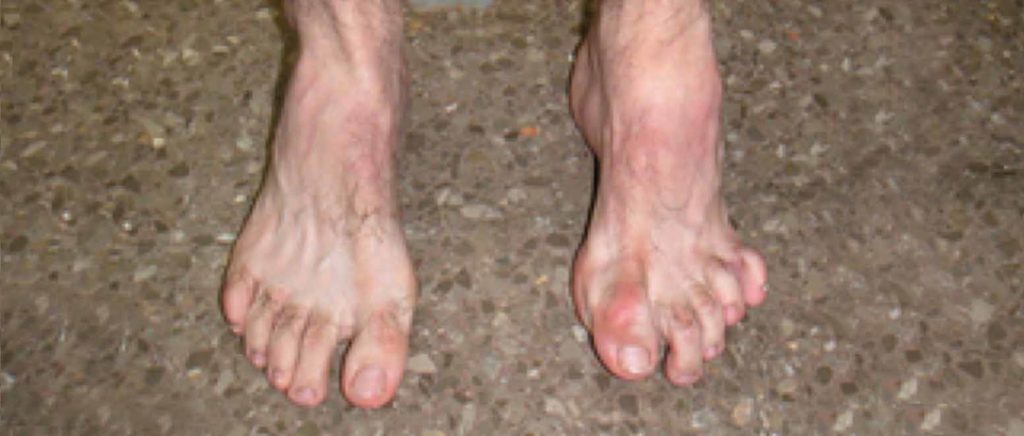
Clinical photograph of a patient with cavus varus feet.
Patient with cavus varus feet associated with hammer toe deformity.
What symptoms does cavus foot deformity cause?
Cavus foot usually causes:
- Pain in the arch and heel areas (talalgia), as well as in the plantar part of the toes (metatarsalgia).
- Sensitivity or cramps in the toes.
- Plantar calluses.
- Instability in the ankles, leading to clumsiness and changes in walking patterns.
- Excessive muscle tension, leading to stiffness in the foot joints or tendon inflammation (tendinitis).
How is it diagnosed?
It is important to treat this type of pathology as early as possible. At ICATPIE, we place a strong emphasis on early diagnosis to identify the type and stage of the condition.
The first step will be to review the patient’s medical history to rule out the possibility of the deformity being caused by a neurological disease. Then, we will conduct a thorough physical examination of the feet and ankles.
We will assess the plantar arch, evaluate muscle strength, and examine the patient’s walking pattern.
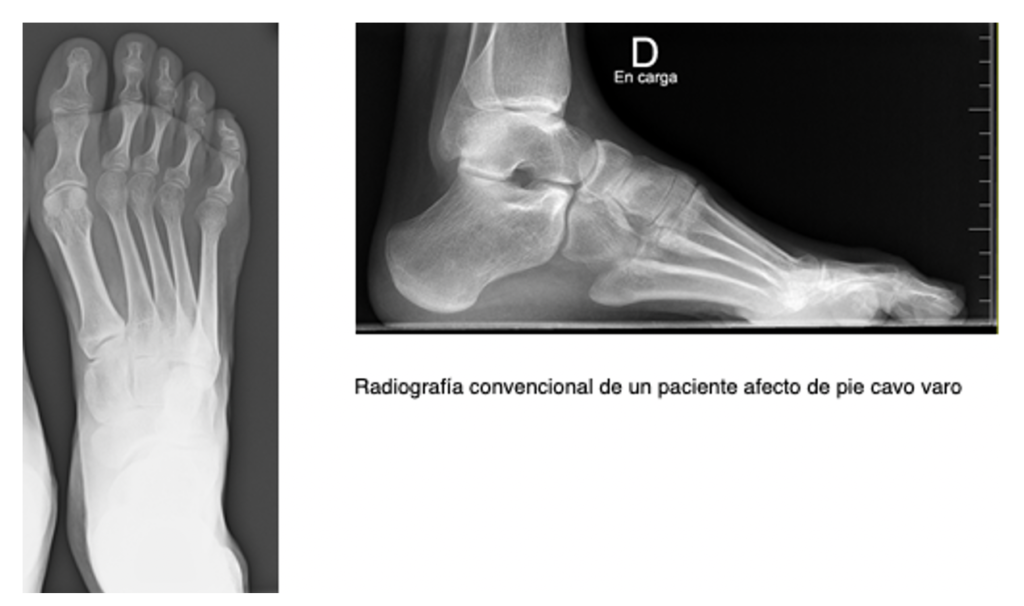
In necessary cases, we may request an X-ray of the feet and ankles in a standing position, and if further diagnosis is required, we may use other complementary tests such as MRI, CT scan, or electromyography.
Once the degree of the deformity is identified, our team of professionals at ICATPIE will advise the best possible treatment for the patient.
What treatment is recommended?
After studying the tests and making the diagnosis, we typically recommend a conservative treatment, which includes the use of orthotic insoles and a proper rehabilitation program.
The goal of the treatment is to normalize the foot’s support and strengthen the Achilles tendon and the anterior tibial tendon.
In cases of severe deformities where previous options are ineffective, reconstructive surgery will be recommended.
What does surgery for cavus foot deformity consist of?
At ICATPIE, we treat cavus foot deformity through a comprehensive surgical approach to correct all the causes of the deformity.
The surgery consists of a series of procedures aimed at placing the foot in the correct position, improving mobility and balance, and reducing pain.
In many cases, surgical correction of cavus foot requires different techniques, both soft tissue and bone-related.
It may be necessary to combine soft tissue release, tendon lengthening or transplantation with bone surgery techniques such as osteotomy, where the shape and position of the affected bones are altered, or arthrodesis, where one or more damaged joints are fused.
The recovery from this type of surgery is usually long. Depending on the surgery performed, the patient may need to keep the foot in a cast for approximately 6 weeks, and the full recovery time may take up to a year. For this reason, at ICATPIE, we only recommend surgery in the most severe cases.