
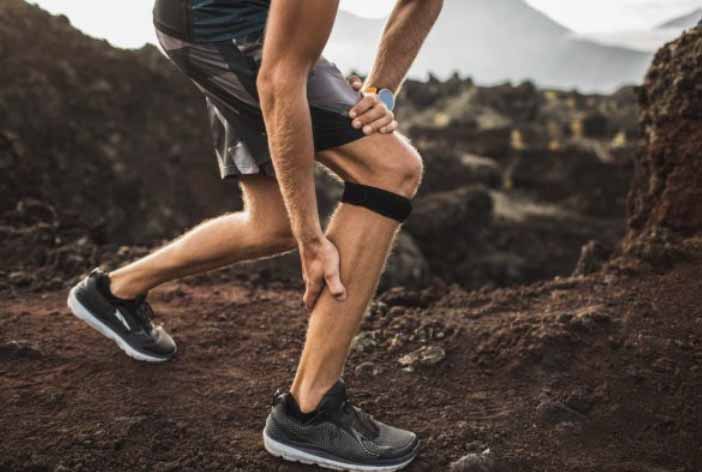
This pathology is common among athletes, particularly runners, dancers, and basketball players.
Other frequent causes include:
- Excess weight.
- Foot alignment abnormalities.
- Physical overexertion.
- Trauma.
- Occasional sports activities in poorly conditioned individuals.
- Rheumatologic diseases.
At ICATPIE, we emphasize accurate diagnosis to determine the cause, type, and stage of the tendinopathy. Identifying how the injury occurred is crucial for addressing risk factors and preventing recurrence.
The first step is to review the patient’s medical history and perform a comprehensive physical examination.
During the physical exam, patients typically experience hypersensitivity and pain when the affected tendon area is palpated. The tendon often appears thickened, swollen, or inflamed.
To confirm the diagnosis and determine the best possible treatment, we usually perform weight-bearing X-rays and an ultrasound of the tendon. If needed for a more precise diagnosis, an MRI may be recommended.
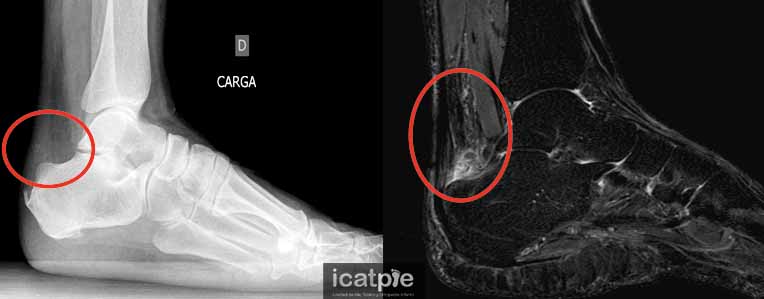
Images of Achilles tendinopathy
It commonly occurs in young athletes when they increase the intensity or duration of their training or in patients who only engage in occasional sports. When a rupture of the tendon fibers occurs, it can be either partial or complete.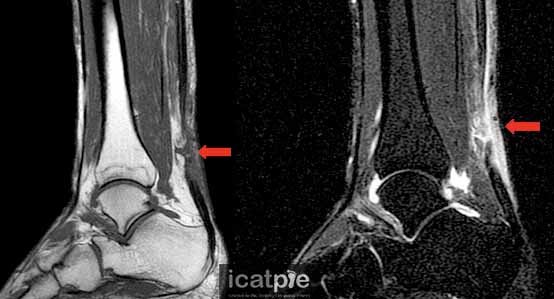
MRI images of a patient who suffered a complete Achilles tendon rupture.
In the area marked with the arrow, the loss of continuity of the tendon can be seen.
Once the tests have been studied and an accurate diagnosis made, treatment options include either a conservative or surgical approach. The decision will depend on the type of injury, its severity, as well as the age and physical activity level of each patient.
- Conservative treatment consists of immobilization with an orthopedic boot and progressive physiotherapy.
- Surgical treatment involves suturing the tendon by approximating the ends of the tendon.
At ICATPIE, patients who are candidates for surgical treatment undergo percutaneous surgery (through small incisions), which improves recovery and reduces postoperative pain compared to open surgery.


